A useful way to read diner history without fetishizing chrome.
Chrome is not evidence
Chrome is not evidence. Neither is a jukebox.
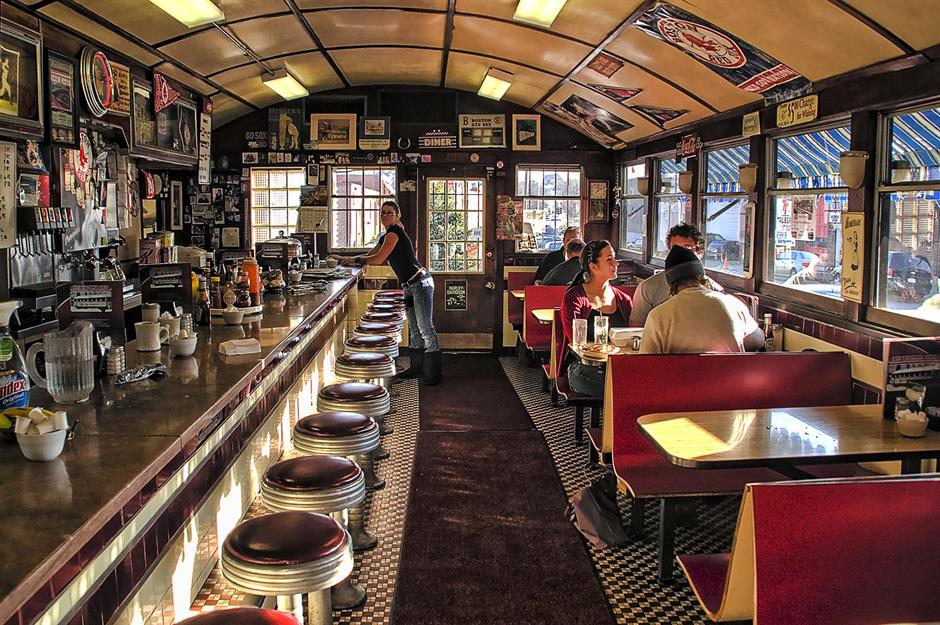
The American diner has been copied so successfully that it is possible to eat in a room containing checkerboard floors, red vinyl, neon and a 1950s soundtrack without encountering anything remotely historic. That does not make the meal bad. It does mean the decor has failed the diner test.
Look at the building before the burger
A genuine roadside classic usually makes sense in relation to its road. It may occupy a purpose-built diner, an old main-street storefront or a long-standing highway site. The room has wear that was earned rather than installed. The menu may have changed, but the business has a relationship with local routines as well as tourists.
The strongest clue is often the customer mix. If everybody is photographing the wall and nobody appears to be on a lunch break, you may be in a museum with fries.
History is not mandatory
A new diner can be excellent. A themed diner can be fun. The point is not to police authenticity for sport. It is to know what experience you are buying.
For a road trip, the most valuable meal is often the one that tells you something about where you stopped. Sometimes that is a seventy-year-old counter. Sometimes it is a new place cooking the food the town actually eats.
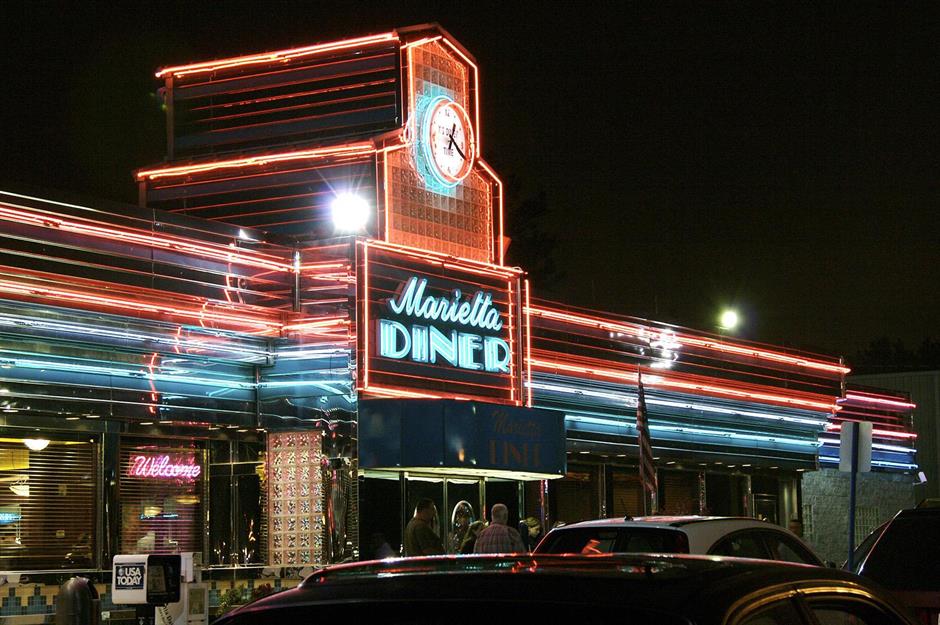
A small rule for photographing roadside America
Take the obvious photograph, then take the explanatory one. The obvious frame gets the sign, diner, motel or giant object. The explanatory frame steps back far enough to include the road, parking, neighbouring buildings and whatever replaced the old traffic pattern.
Around counter seating, location and menu, those wider photographs will age better. They record not only the thing you stopped for, but the reason it existed. Roadside America makes most sense when the road remains in the picture.
The best ending is not a verdict
It is tempting to finish a roadside story by deciding that the old America was better. That would be easy and mostly useless. The old road was slower, less standardised and often more visually interesting. The new road is extraordinarily good at moving people safely and predictably across huge distances.
The point of leaving the fast road near counter seating is not to reject modern travel. It is to recover the part efficiency edits out: contact, accident, local difference and the possibility that the thing worth seeing was not the thing you were driving toward.