There are few American buildings more immediately recognisable than a diner.
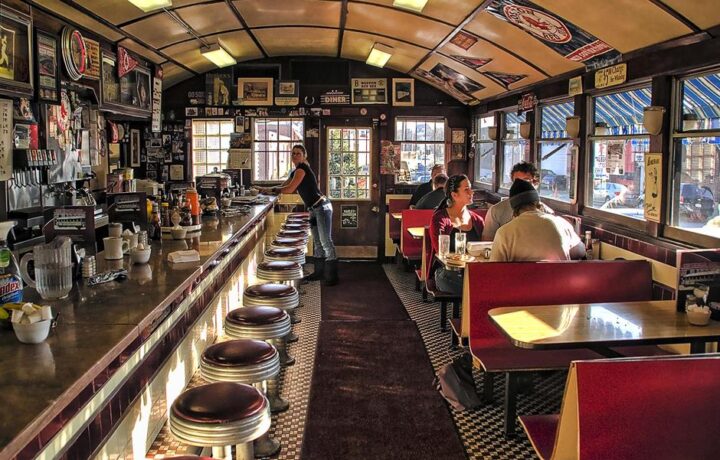
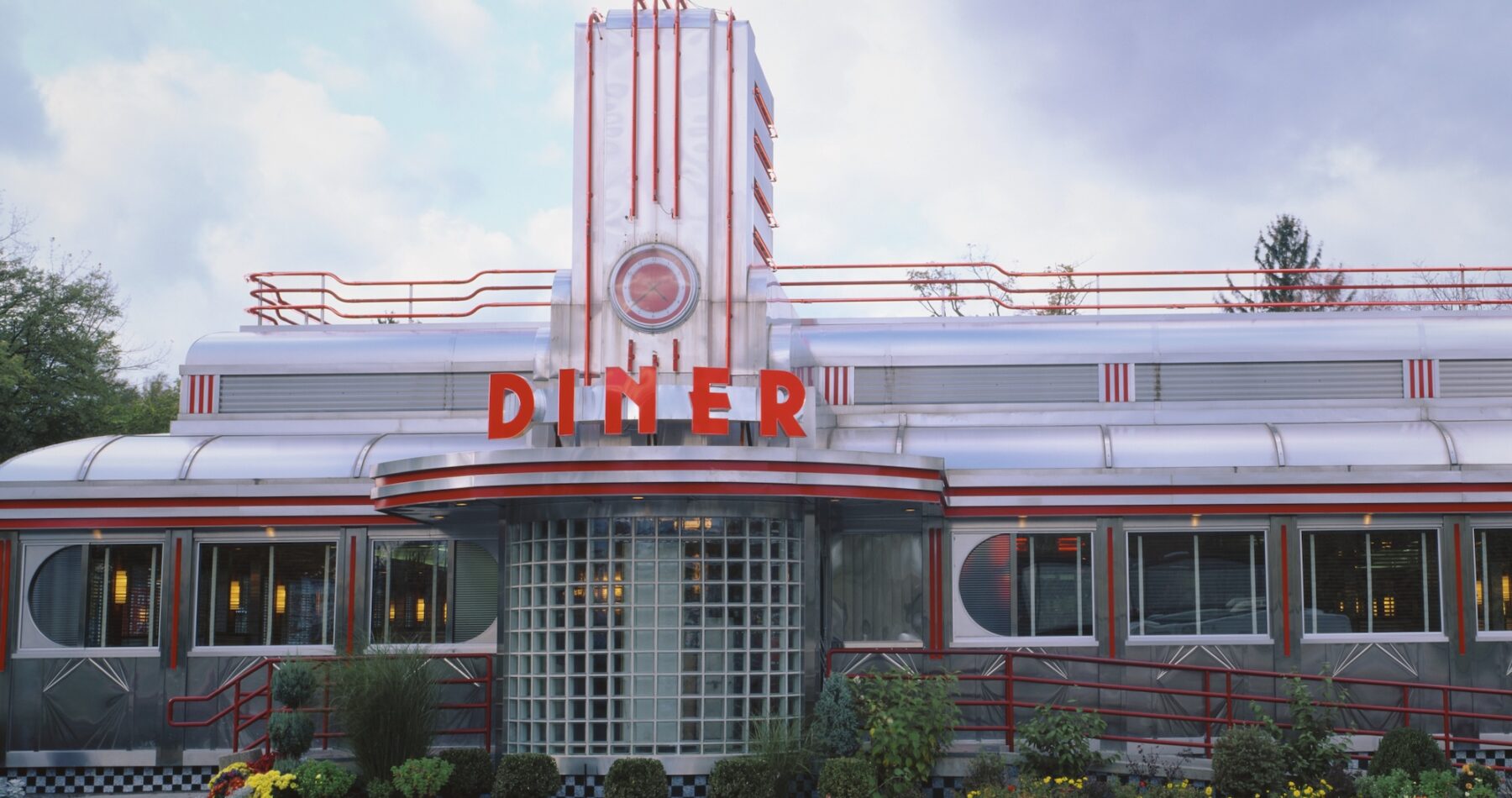
Chrome. Neon. A long counter. Stools that swivel whether they need to or not. Coffee poured with the confidence of someone who knows you will eventually require another cup.
Outside, the building looks suspiciously like a railway carriage that has escaped the tracks and developed an interest in pancakes.
Which raises an obvious question.
Why?
The answer begins not with a train, but with a hungry newspaper office in Providence, Rhode Island.
And a man called Walter Scott.
America’s original late-night food truck
In 1872, Scott began operating a horse-drawn lunch wagon outside the offices of the Providence Journal.
His customers were people with a problem that remains familiar 150 years later: they were awake when most respectable places to eat were not.
Newspaper workers, night-shift employees and other late-night customers could buy inexpensive food and hot coffee from Scott’s wagon after ordinary restaurants had closed.
In other words, one of America’s most enduring restaurant traditions began with something remarkably close to a nineteenth-century food truck.
There wasn’t much room for romance.
The earliest customers bought their food through a window and ate outside. But Scott’s idea was good enough to attract imitators, and the wagons became progressively more sophisticated.
By the late 1880s, some were large enough for customers to get inside. Specialist manufacturers began building elaborate lunch wagons for operators rather than expecting restaurateurs to improvise their own.
The basic proposition was difficult to argue with.
Put a compact kitchen where hungry people already were. Serve them quickly. Stay open when other businesses weren’t.
America has spent the intervening century and a half inventing increasingly complicated restaurant concepts without completely improving upon it.
Then the wheels came off
Literally.
As lunch wagons became larger, operators increasingly left them in permanent locations. Wheels became less important. Kitchens improved. Counters lengthened. What had been a mobile business began turning into a building.
This is where the railway story gets interesting.
Classic diners are often described as converted railway cars, and a small number really were adapted from train or trolley cars. But the familiar American diner did not simply descend from redundant railway carriages.
It descended from lunch wagons.
The resemblance to trains became increasingly deliberate.
Manufacturers produced long, narrow prefabricated restaurants that could be transported to their destination. They increasingly borrowed the appearance and language of railroad dining cars. Patrick Tierney consciously invoked the railroad-car look in his designs and was among the manufacturers applying the language of the railroad diner to the roadside restaurant.
By the mid-1920s, diner was replacing lunch car and dining car as the name for this peculiar American restaurant.
It was a useful piece of rebranding.
A lunch wagon sounded like somewhere to inhale a sandwich before returning to the night shift.
A dining car suggested travel, modernity and perhaps a clean tablecloth.
The diner becomes respectable
Early lunch wagons were overwhelmingly male places, designed around workers who wanted cheap food quickly.
That eventually became a commercial limitation.
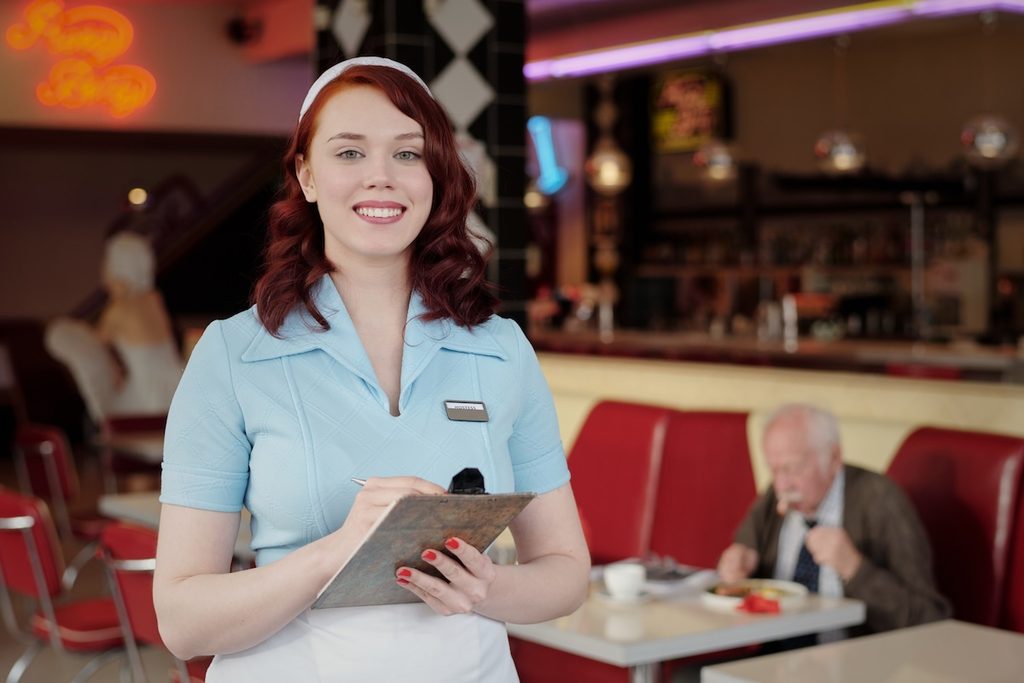
Manufacturers and operators began making diners more inviting to women and families. Interiors became brighter and more decorative, menus expanded and the experience gradually moved beyond standing at a counter for a quick meal.
The shift began in earnest during the 1920s. Tierney introduced table service in 1924 as manufacturers sought to attract more women, and by the 1930s booths were becoming common.
The diner was evolving from a predominantly male late-night haunt into a restaurant for families as well.
Then came the architecture we now remember.
During the 1930s and particularly after World War II, diners embraced stainless steel, chrome, Formica, ceramic tile, glass block and neon. Streamlining made buildings look as though they ought to be travelling at 80 miles an hour even while firmly connected to the sewerage system.
Factories including the Worcester Lunch Car Company in Massachusetts and Jerry O’Mahony in New Jersey could manufacture a restaurant and send it to its future home.
That prefabricated heritage is important because, strictly speaking, a traditional diner isn’t merely a restaurant serving eggs at inconvenient hours.
It’s a type of building.
Historically, the classic diner was built in a factory and transported to its site.
That explains why old diners can look so wonderfully improbable: a shiny manufactured object deposited beside a highway, at a city intersection or outside a factory and then slowly absorbed into the neighbourhood around it.
Why New Jersey has so many diners
No state became more closely associated with the diner than New Jersey.
There was a practical reason.
New Jersey’s diner identity was reinforced by an extraordinary concentration of manufacturers, including Jerry O’Mahony and several other important companies. Its dense population, industrial cities, highways and proximity to New York also provided fertile territory for the restaurants themselves.
The result was a particularly strong diner culture across New Jersey and neighbouring New York, Pennsylvania and New England.
But the idea travelled.
Diners appeared beside highways and in towns across America, becoming part restaurant, part roadside landmark and part community noticeboard.
And the menu evolved accordingly.
Eggs. Burgers. Meatloaf. Club sandwiches. Pie. Pancakes. Coffee.
Often all of them at once, because another important diner tradition is the refusal to accept that breakfast and dinner require separate portions of the day.
The road changes the diner
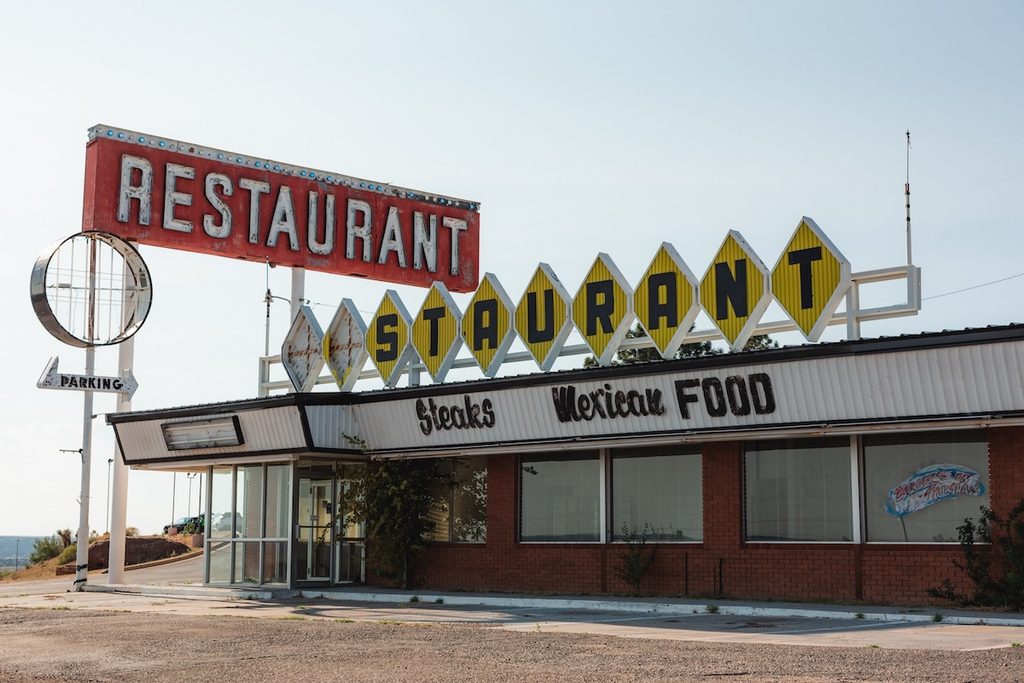
The automobile helped turn the diner from an urban lunch-car tradition into an icon of the American road.
More Americans driving meant more people needing somewhere inexpensive and informal to eat. Diners were naturally suited to roads, intersections and commercial strips.
Then the same road culture that helped them prosper produced a formidable competitor.
Fast-food chains could offer motorists something even more standardised: familiar menus, prominent signs, drive-through service and thousands of locations.
By the 1960s and 1970s, limited-menu chains were taking over much of the roadside fast-food business once occupied by diners.
The diner never disappeared.
Instead, it became something the chains had difficulty reproducing.
Individual.
A McDonald’s in Ohio is reassuringly similar to one in Arizona.
A good diner isn’t.
It has regulars. A waitress who knows somebody’s order. Photographs on the wall that haven’t been reconsidered since 1987. A pie rotating slowly beneath plastic. A menu whose ambition has somehow expanded to eight laminated pages.
The inefficiency is part of the attraction.
How to recognise the real thing
For road-trippers, the best surviving diners are worth seeking out not simply because they’re old.
Look for the architecture.
Long, narrow buildings. Stainless-steel exteriors. Curved corners. Bands of windows. Counter seating. Fixed stools. Booths squeezed into spaces that modern restaurant designers would consider unreasonable.
Some genuine historic diners are hidden beneath later additions. Others have been beautifully restored. And plenty of excellent restaurants call themselves diners despite having been constructed conventionally on site.
There is no reason to become doctrinaire about it.
If somebody serves you eggs, hash browns and bottomless coffee at 11pm, this is not the moment to demand architectural provenance.
But knowing what you’re looking at makes America’s surviving factory-built diners considerably more interesting.
They are descendants of a business model invented for people who were hungry after Providence went to bed.
The horse disappeared. The wheels came off. The wagon became a building. The building borrowed the appearance of a railway car. The railway car became chrome and neon.
And somewhere along the way, a place designed to feed night-shift workers became one of the buildings America uses to recognise itself.
That is a lot of history to contemplate over a cup of coffee.
Fortunately, someone will probably be along to refill it.